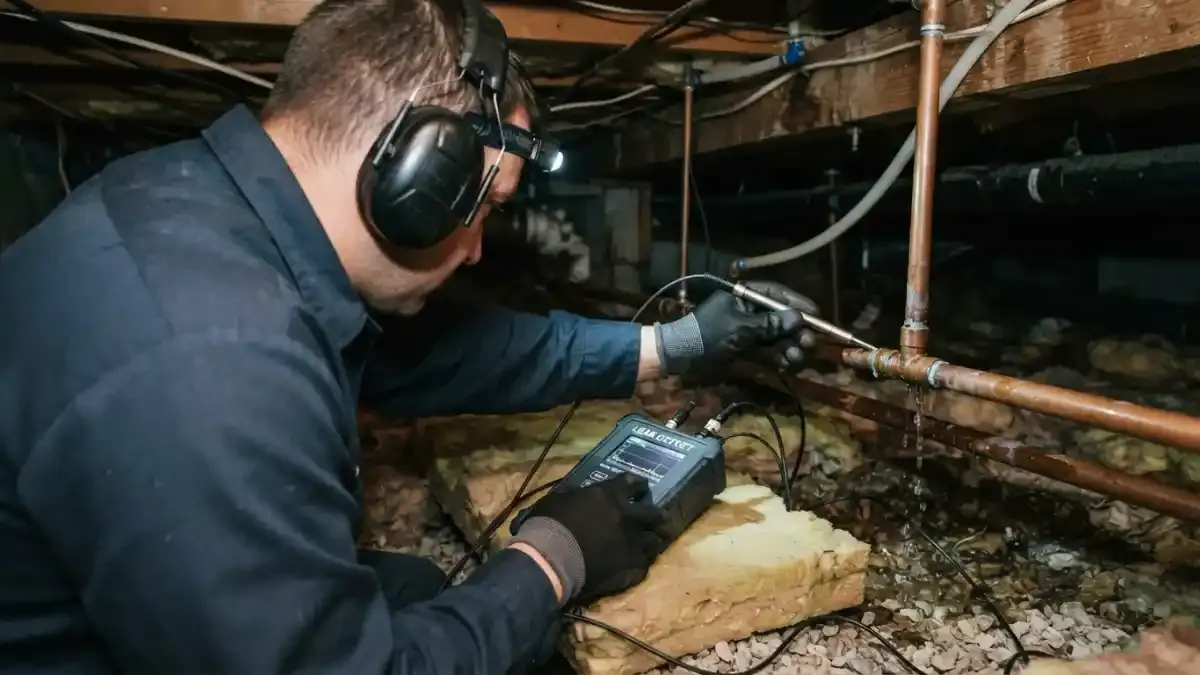
What leak detection actually finds
Leak detection locates water escaping from supply lines, drains, heating loops and service lines without opening walls blindly. The goal is a precise spot, so repair is small and drywall or concrete is cut only where needed.
It is not the same as repair. After the leak is found, the plumber fixes it or hands the location to another trade.
The tools
| Method | How it works | Best for |
|---|---|---|
| Acoustic listening | Microphones hear water escaping | Pressurized supply lines. |
| Thermal imaging | Camera sees temperature differences | Hot water lines, radiant floors. |
| Tracer gas | Safe gas escapes through leaks and is sniffed above | Slab and wall leaks. |
| Moisture meters | Read wetness in materials | Confirming damp areas. |
| Pressure testing | Isolates a section to see if it holds | Narrowing which line leaks. |
A good specialist uses more than one method and cross-checks. A single instrument can mislead.
Call the 24/7 line and describe the problem. A dispatcher sends a licensed plumber.
What a visit looks like
- The plumber asks about symptoms, the bill and any past repairs.
- The main valve and meter are checked to confirm a leak exists.
- Lines are isolated and pressure tested.
- Listening and thermal tools narrow the location.
- A written report names the spot, the cause and the repair options.
Ask whether the visit ends with a precise location or only a general area.
Hidden leak signs
- A water bill that rises without explanation.
- The sound of running water when everything is off.
- Warm spots on the floor.
- Stains or bubbling paint.
- Musty smell in a closed room.
- Low pressure at several fixtures.
Any of these deserves action. Water damages structure and breeds mold, so early detection saves money.
Who is qualified
In Illinois, the Department of Public Health licenses plumbers under the Illinois Plumbing License Law. You can check a plumber's license on the department's online lookup before work begins.
Also ask about insurance and whether the company stands behind the detection. See leak detection for how our visit works, and burst pipe repair if a pipe has already failed.
After the leak is found
The repair depends on where the leak is. A joint in an accessible pipe is a small job. A pipe in a slab may call for rerouting, which is why some owners consider repiping when failures repeat.
Ask for photos of the leak and the repair. They are useful for insurance and for resale.
Slab leaks and what makes them different
A slab leak is a leak in a pipe under the concrete floor. Signs include warm spots on the floor, the sound of running water and sudden bill increases. The fix may mean breaking the slab or rerouting the line overhead.
A specialist pinpoints the spot so the cut is small. Ask about the options and the cost of each before agreeing to anything.
Questions to ask before you hire
- What methods will you use and why.
- Will I get a written report with photos.
- How accurate is the location.
- What happens if you cannot find the leak.
- Is the detection fee applied to the repair.
A confident answer to each is a good sign. Vague answers are a reason to keep looking.
Insurance and documentation
Many insurers cover the damage a leak causes but not the cost of finding or fixing the leak itself. Policies differ. Ask your insurer what is covered, and keep the plumber's report.
The report with a photo of the leak, the location and the cause helps support a claim.
Leaks in heating systems
Hydronic heating loops, whether radiators or in-floor tubing, can leak too. A boiler that needs frequent water top-ups is a clue. Thermal imaging shows warm spots where hot water escapes into a slab or wall.
A pressure test isolates a zone to find which loop is losing water. See boiler repair for what a heating visit includes.
Why prompt detection saves money
- Small leaks grow as pressure wears the pipe.
- Wet framing and drywall breed mold in days.
- Floors, cabinets and insulation soak up water.
- Water bills climb every month the leak runs.
- Insurers may deny claims for long-term leaks.
Acting on early signs costs far less than repairing the damage a long-running leak leaves behind.
What a good report includes
A written report should state where the leak is, what pipe it is in, how it was found and what repair is recommended. Photos or thermal images should be attached. It should also say what was ruled out.
Keep the report with your home records. It supports insurance claims and answers a future buyer's questions.
What the visit costs depend on
Ask whether the detection fee is applied to the repair if you hire the same company.
Comparing a specialist with a general plumber
A general plumber can often find a visible leak and repair it. A detection specialist brings tools for hidden leaks and may not do the repair. Many plumbing companies do both.
Ask whether the person who finds the leak will also fix it. One company handling both avoids handoffs and finger pointing if the first repair does not hold.
Detection across the area
Hidden leaks happen in every town. Callers from Bloomingdale and Glendale Heights often describe the same signs, a bill that climbs or a floor that feels warm.
Describe the symptom and when it started. Those two facts help the plumber choose the right method first.
Illinois rules and local contacts
The Illinois Plumbing Code is 77 Ill. Adm. Code 890, and plumbers are licensed by the Illinois Department of Public Health under 225 ILCS 320. The department's License Verification tool lets you look up a plumber by name.
For the Carol Stream water system, Public Works at 630-871-6260 can tell you about the village side of your service line and its service line material inventory.
Questions readers ask
Do you offer leak detection at night in Carol Stream?
The 24/7 line takes urgent leak calls at any hour.
Do you have to cut walls to find a leak?
Not usually. Tools narrow the spot first.
How accurate is acoustic detection?
It works best on pressurized pipes. A specialist cross-checks with other tools.
How can I check a plumber's license?
Use the Illinois Department of Public Health License Verification tool.
Does insurance cover leak detection?
Some policies do when a covered loss is involved. Ask your insurer.
Standards and sources
This guide follows the Illinois Plumbing Code, 77 Ill. Adm. Code 890, and general manufacturer guidelines for the equipment discussed. Local facts come from the Village of Carol Stream, the DuPage Water Commission and the Daily Herald, as named in the text. Product instructions for your own equipment always take priority over general advice.