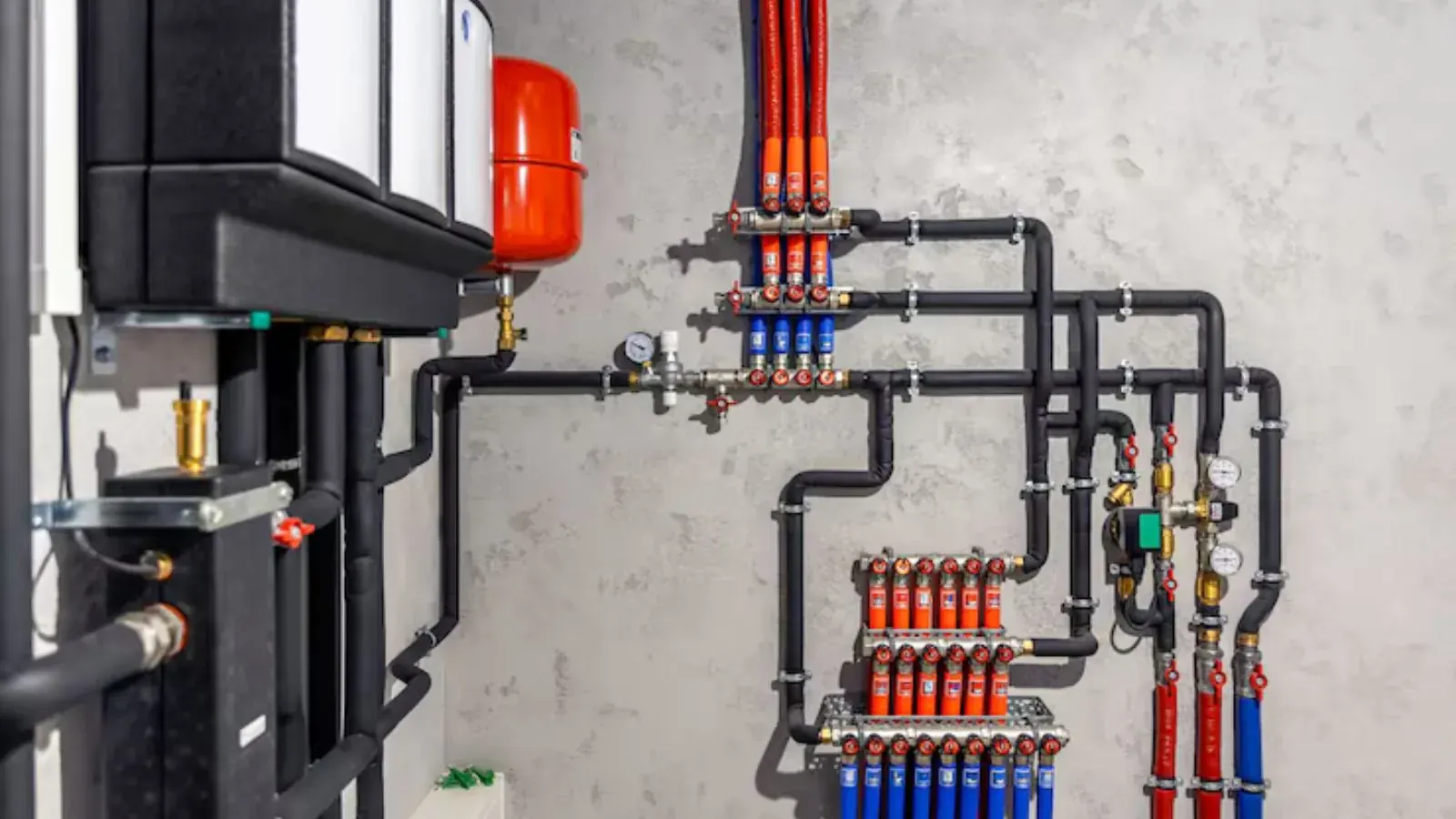
No heat: what to check
- Confirm the thermostat is set to heat and the batteries are fresh.
- Check that the boiler has power and the switch is on.
- Look at the pressure gauge. It should read in the range on the label, often 12 to 15 psi cold.
- Confirm the gas supply and, if equipped, the pilot or igniter.
- If the boiler lockout light is on, note any code and call.
Do not relight a pilot if you smell gas. Leave the house, call the gas utility from outside and then call a plumber once it is safe.
Common boiler problems
| Symptom | Likely cause | Typical repair |
|---|---|---|
| No heat or hot water | Failed igniter, control or circulator | Replace the part. |
| Rumbling or kettling noise | Scale or sludge in the heat exchanger | Flush or descale. |
| Pressure drops | Leak or failed expansion tank | Find the leak, replace the tank. |
| Radiator cold at top | Trapped air | Bleed the radiator. |
| Boiler cycles on and off | Oversized unit or bad sensor | Adjust controls, replace sensor. |
Water leaking from the boiler body is a more serious sign. Turn the unit off and call.
The line is staffed around the clock. Describe what is happening and we dispatch a licensed plumber.
Conventional and condensing boilers
Older boilers are non-condensing and vent through a chimney. High-efficiency condensing boilers cool the exhaust enough to form water, so they drain condensate and usually vent through plastic pipe. They can be more efficient, but only if return water temperatures are low enough, which depends on your radiators or in-floor loops.
A plumber considers the pipe size, the radiators, the venting route and the condensate drain before recommending a replacement.
Related systems
Some boilers also supply domestic hot water through an indirect tank. If hot water is the only problem, the issue may be the tank, the zone valve or the aquastat, not the boiler itself. A standalone heater is covered under water heater repair.
Leaks in the heating loop can mimic plumbing leaks. If you suspect hidden wet spots, leak detection can help pinpoint them.
Gas, safety and permits
Gas appliances should be serviced by a qualified professional. Carbon monoxide alarms on every level and near the boiler room are a basic safeguard. The Illinois Plumbing Code, 77 Ill. Adm. Code 890, covers plumbing aspects of installations, and local rules may require a permit for replacement. Ask the Village of Carol Stream building staff what applies.
Heating system work may also involve a heating contractor or electrician. The plumber tells you if another trade is needed.
Quote factors
Annual maintenance reduces breakdowns. Ask about a check before the heating season.
Maintenance between visits
- Keep the boiler room clear of storage.
- Check the pressure gauge monthly in the heating season.
- Bleed radiators that are cold at the top.
- Test carbon monoxide alarms each month.
- Note any new noises and when they occur.
A written note of dates and symptoms helps the plumber find an intermittent fault faster. If the boiler is also your hot water source, ask how that is plumbed.
What to do if the boiler fails or you smell gas
- If you smell gas, leave the house and call the gas utility from outside.
- Do not use switches, flames or phones near a suspected gas leak.
- If a carbon monoxide alarm sounds, get everyone outside and call 911.
- If water is leaking, turn off the boiler and the water feed.
- Call the 24/7 line once everyone is safe.
Do not try to relight a pilot or reset a lockout repeatedly. A boiler that keeps failing needs a diagnosis.
Boiler Repair and Replacement questions
Do you repair boilers?
Yes, residential hot-water boilers and their pumps, valves and controls.
My radiator is cold at the top. Is that serious?
Usually it is trapped air. Bleeding the radiator often fixes it.
Why does my boiler pressure keep dropping?
A leak or a failed expansion tank is the usual cause.
Should I repair or replace an old boiler?
It depends on age, repair cost and efficiency. The plumber gives both prices.
What if I smell gas?
Leave the house, call the gas utility from outside, then call a plumber when it is safe.
Standards and sources
Plumbing work in Illinois follows the Illinois Plumbing Code, 77 Ill. Adm. Code 890, and plumbers are licensed by the Illinois Department of Public Health under 225 ILCS 320. Local water facts come from the Village of Carol Stream 2025 water quality report and the DuPage Water Commission FAQ. These are the standards and sources we rely on, and anything we could not verify is left out.