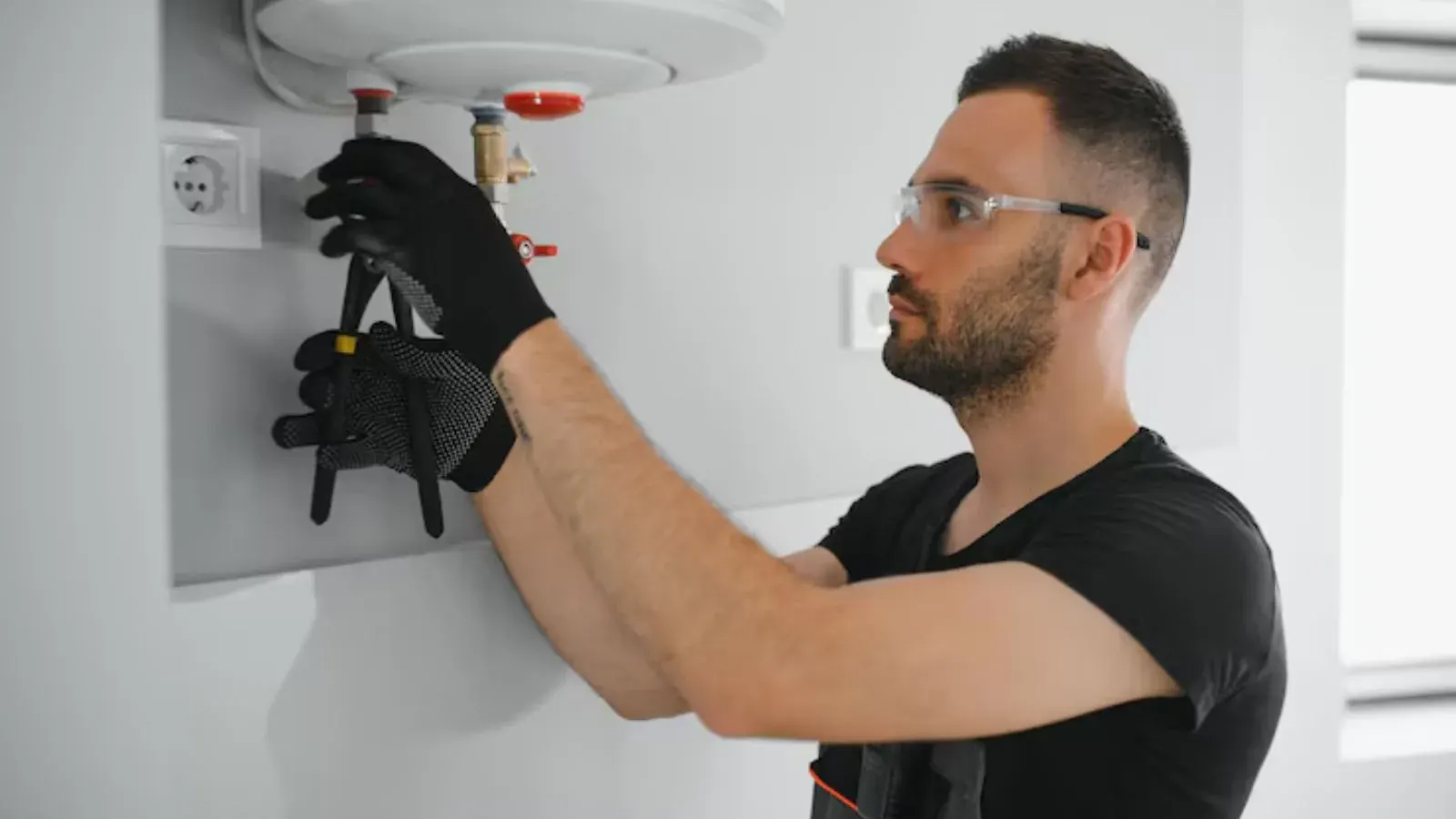
What the anode rod is for
A steel tank sits in water all day, and water slowly attacks steel. The anode rod is a rod of magnesium, aluminum or zinc alloy that hangs inside the tank. It corrodes first so the tank does not. When the rod is gone, the tank is next.
That is why plumbers call it the sacrificial rod. Checking it every few years can add useful life to a tank that is otherwise sound.
Signs the rod is spent
- Rotten egg smell from hot water.
- Rusty or discolored hot water.
- Popping or rumbling noises as the tank heats.
- A tank older than five or six years with no past service.
- Visible pitting or a thin core wire when the rod is pulled.
Several of these also point to sediment or bacteria, so they are clues, not proof. The only sure test is to look at the rod.
Call the 24/7 line and describe the problem. A dispatcher sends a licensed plumber.
What the job involves
- Turn off power or gas and close the cold-water valve.
- Open a hot tap and drain a few gallons from the tank.
- Loosen the hex head on top with a long socket or breaker bar.
- Pull the old rod. If it is mostly bare core wire, replace it.
- Wrap the threads in thread seal tape, install the new rod and restore water, then check for leaks before relighting.
The rod is often stuck. A long breaker bar or an impact wrench is usually needed. Some tanks have limited overhead clearance, which calls for a flexible rod.
Which rod to choose
| Rod type | Strengths | Cautions |
|---|---|---|
| Magnesium | Strong protection in softer water | Can smell in some waters. |
| Aluminum or zinc alloy | Reduces odors, lasts in hard water | Aluminum residue concerns for some households. |
| Powered anode | No sacrificial loss, long life | Needs an electrical connection. |
If you have a softener, check with the manufacturer, because softened water consumes magnesium rods faster. See water softener and filtration for how treatment changes the picture.
When not to bother
If the tank is more than about ten to twelve years old, leaking at the base or showing rust at the seams, a new rod will not save it. The cost of a rod, the time to pull it and the risk of finding a corroded tank argue for replacement instead.
See water heater replacement for how that decision works. In older homes in towns like Bloomingdale or West Chicago, many tanks reach that age before they ever see maintenance.
Flush while you are there
While the tank is open, drain and flush the sediment from the bottom. Sediment insulates the water from the burner or element, which wastes fuel and creates noise.
Flush until the water runs clear. If it keeps running brown, the tank may be heavily scaled and nearing the end of its life.
When a plumber should do it
A stuck rod, a tank with no overhead room, a gas heater with a tricky vent or any sign of a leak are all good reasons to call. A plumber can also check the temperature and pressure relief valve, the expansion tank and the vent while on site.
If you want the work done properly the first time, schedule a visit through the 24/7 line and ask for a water heater service check.
Tools and safety for the job
- A 1-1/16 inch socket and a long breaker bar.
- Thread seal tape rated for potable water.
- A garden hose for draining.
- Gloves and eye protection.
- A helper to steady the tank if clearance is tight.
Never work on a gas heater without first turning the gas control to off. Electric heaters must have power off at the breaker. A hot tank can scald, so let it cool or drain it carefully.
Why some tanks smell after a rod swap
A rotten egg smell comes from bacteria that convert sulfur compounds into hydrogen sulfide. Magnesium rods feed that reaction in some waters. Switching to an aluminum or zinc alloy rod, or a powered rod, often eliminates it.
Flushing the tank with a dilute hydrogen peroxide solution can also help. Follow the manufacturer's instructions, and rinse well before returning the heater to service.
What to ask when you call a plumber
- How old is the tank and has the rod ever been checked.
- What condition is the rod in and can I see it.
- Is the tank worth saving or should it be replaced.
- What other parts, such as the relief valve, need attention.
- What will the total price be before work starts.
A plumber who answers these questions plainly is giving you the information you need to decide.
Signs your tank has gone too far
Rust-colored water that stays rusty after you flush the tank, a rusty ring around the base or a dripping seam all point to an internal tank failure. At that stage a rod is not a fix. Plan for replacement soon.
Cold weather is a bad time for a tank to fail. Planning a swap in a mild month gives you time to compare options. See water heater installation.
What to do if the tank is leaking right now
- Turn off the gas or power to the heater.
- Close the cold-water valve above the tank.
- Open a hot tap to relieve pressure.
- Place a bucket or towels under the leak.
- Call the 24/7 line if the leak is from the tank body.
A leaking tank body cannot be fixed by a rod. Shut it down and call a plumber to replace it.
Rod life in different water
In softened water, a magnesium rod can be consumed in two or three years. In moderately hard water it may last five or more. Pulling the rod every few years and looking at it is the only sure way to know.
If more than six inches of core wire shows, or the rod is coated in chalky buildup, replace it. Keep a note of the date so you know when to check again.
Housing age in Carol Stream and why it matters here
Carol Stream's population rose from 4,434 in 1970 to 31,716 in 1990, according to census counts, so a large share of its homes were built in those decades.
A heater that has outlasted two or three owners may never have had its anode rod checked. In those homes, a service visit can reveal whether the tank is worth saving.
Questions readers ask
Do you handle water heater emergencies at night in Carol Stream?
Yes. The 24/7 line takes calls at any hour.
How often should I check the anode rod?
Many plumbers suggest every few years, sooner in hard or softened water.
Will a new rod stop a leaking tank?
No. A leak from the tank body means replacement.
Can I replace the rod myself?
Often, with the right tools. A stuck rod or tight clearance is a good reason to call a plumber.
Does a rod void my warranty?
Check the manual. Some warranties require the rod to be maintained.
Standards and sources
This guide follows the Illinois Plumbing Code, 77 Ill. Adm. Code 890, and general manufacturer guidelines for the equipment discussed. Local facts come from the Village of Carol Stream, the DuPage Water Commission and the Daily Herald, as named in the text. Product instructions for your own equipment always take priority over general advice.