Confirm the bill first
Compare the usage line on your bill with the same months last year. Look for changes in billing period length and meter reads that were estimated. A bill can rise because the period was longer, not because water was lost.
If usage is really up, move on to the meter test.
The meter test
- Turn off every fixture and appliance that uses water.
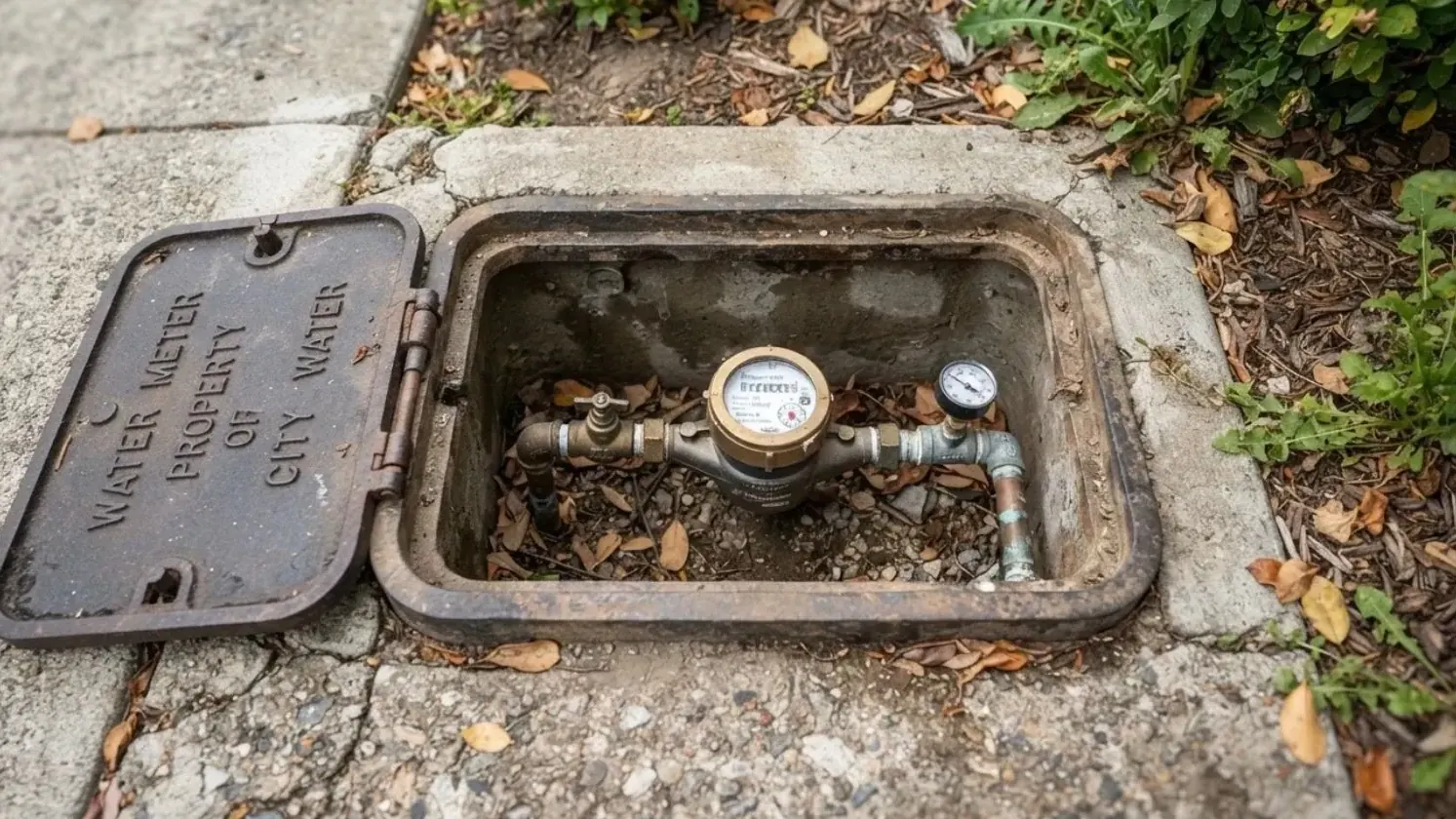
- Find the water meter, usually in the basement, and note the reading.
- Look for a small leak indicator, often a triangle or dial that spins.
- Wait fifteen minutes without using water.
- If the reading moved or the indicator spins, water is leaking somewhere.
If the meter does not move, the leak is intermittent. Toilets and irrigation often cause that pattern.
Call the 24/7 line and describe the problem. A dispatcher sends a licensed plumber.
Toilets are the top suspect
A toilet flapper that does not seal lets water leak from the tank into the bowl. You may hear no sound at all. Add a few drops of food coloring to the tank, wait twenty minutes and check the bowl. Color in the bowl means a leaking flapper.
Flappers are cheap to replace. See toilet repair for the usual fixes.
Other places water hides
| Place | How to check | Likely fix |
|---|---|---|
| Water heater | Look for dampness at the base and the relief valve | Repair valve or replace tank. |
| Irrigation system | Check for wet turf and run each zone | Repair line or head. |
| Hose bib | Look for drips or damp wall inside | Replace washer or valve. |
| Slab or wall pipe | Listen for hissing, feel for warm floor | Professional detection. |
| Service line | Meter moves with main valve closed | Water line repair. |
If the meter moves with the main valve closed in the house, the leak is outside, between the meter and the house.
When to call a plumber
If you have done the meter test and the toilet test and the problem remains, hidden leak detection is the next step. Plumbers use listening equipment and thermal imaging to find pipe leaks without tearing out walls.
Read leak detection to see how the visit works. In Wheaton and elsewhere nearby, the same methods apply.
Ask the utility about adjustments
Some utilities offer leak adjustments on bills when a repair is documented. Policies differ. Ask the Village of Carol Stream utility billing staff what documentation they accept.
Keep the plumber's invoice and a note of the date of repair.
Irrigation systems and outdoor use
A lawn sprinkler system can leak underground with no sign until a patch of turf turns soggy. A stuck valve can run a zone for hours. Check the controller schedule and look for wet spots or low pressure at the heads.
Hose bibs left running, a leaking sillcock or a garden hose connected to a faucet with a loose washer can also add up. Look at the fixtures outside before you go further.
The sound test
- Turn off every water-using fixture.
- Stand near the meter and the main valve and listen.
- Listen at the water heater and at the base of the wall behind bathrooms.
- Hissing or the sound of trickling water is a clue.
- Note where it is loudest and tell the plumber.
The human ear is a decent tool for a first pass. Professional microphones are far more sensitive and can pick up leaks you cannot hear.
Water heater and softener leaks
A relief valve discharge pipe that drips, a tank seam that weeps or a softener that cycles endlessly can add gallons without making a mess. Look at the floor drain near the equipment and the discharge line.
A softener that does not stop regenerating sends water to the drain around the clock. If you hear water running near the unit, check the control valve.
When the leak is outside the house
A leak on the service line between the meter and the house can run for weeks without a trace if the soil drains well. Signs include a soft patch in the lawn, a sunken spot or a puddle that never dries.
If the meter test shows a leak and the house tests clean, see water line repair. The plumber confirms the spot and explains the options.
A simple log that helps the plumber
- The date you noticed the bill change.
- Meter readings at the same time each day for three days.
- Any recent plumbing or irrigation work.
- Changes in household size or habits.
- Where you hear water or see dampness.
A short log lets the plumber rule things out quickly and focus on the likely cause.
What the meter dial tells you
Most residential meters have a low-flow indicator, often a small triangle or star. If it turns while everything is off, water is moving. The faster it turns, the bigger the leak.
Take a photo of the dial and the register digits. Repeat in an hour with no water used. The difference shows how much is leaking.
When the bill is right and the use is real
Sometimes the bill is accurate and the use changed. Guests, a new pool fill, a leaking spigot used for washing or a hot spell that increased watering can all raise usage.
Compare gallons used per day with a normal month. If the number climbs without a reason, keep investigating. If you can explain it, the bill may simply reflect real use.
Hidden leaks nearby
Households in Bloomingdale and Hanover Park see the same pattern, a bill that jumps with no visible cause.
The meter test works in any town. It takes fifteen minutes and tells you whether to keep looking.
Where Carol Stream's water bill questions go
Carol Stream's Public Works can be reached at 630-871-6260, the number the village lists in its 2025 water quality report for questions about its water system.
The report also says the village has a service line material inventory available from Public Works. If a leak may be on the service line, that inventory helps the plumber know what pipe to expect.
Questions readers ask
Do you handle hidden leak emergencies at night in Carol Stream?
Yes. The 24/7 line takes calls at any hour.
How do I know if the leak is outside the house?
If the meter moves with the main valve in the house closed, the leak is on the service line.
Can a toilet cause a big bill?
Yes. A silent leak can waste thousands of gallons.
Is a high bill always a leak?
No. Longer billing periods and heavy use can also raise it.
Can you find leaks without opening walls?
Often yes, with listening and thermal tools.
Standards and sources
This guide follows the Illinois Plumbing Code, 77 Ill. Adm. Code 890, and general manufacturer guidelines for the equipment discussed. Local facts come from the Village of Carol Stream, the DuPage Water Commission and the Daily Herald, as named in the text. Product instructions for your own equipment always take priority over general advice.