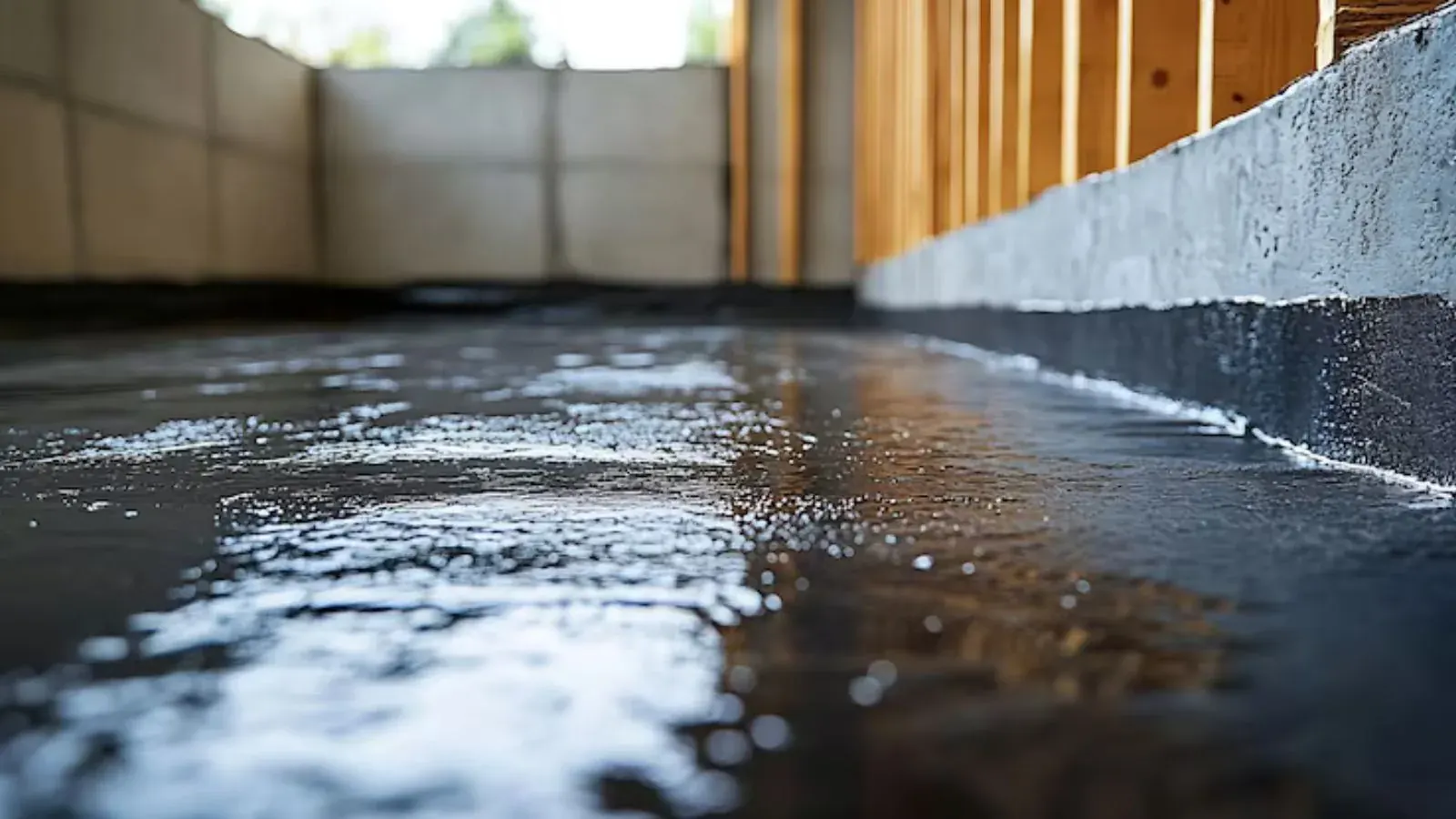
Where basement water comes from
Water enters through the floor-wall joint, through cracks, around pipe penetrations, through window wells and up through the slab when the water table rises. Each path has a different fix. A plumber starts by watching where and when it appears, not by selling a single system.
- Seepage at the floor-wall joint after heavy rain.
- Wet spots on the slab that return in the same place.
- Damp stains or white mineral crust on block walls.
- Water at a window well or a basement stair.
- A musty smell with no visible water.
A musty smell without wetness can also be high humidity. Your plumber can help separate moisture from leaks.
Systems compared
| System | What it does | Works best when |
|---|---|---|
| Interior perimeter drain | Collects water at the footing and sends it to a sump | Water enters at the floor-wall joint. |
| Sump pump with pit | Pumps collected water outside | Any drain system needs one. |
| Crack injection | Seals a single crack with epoxy or polyurethane | A localized crack leaks. |
| Wall sealant or membrane | Protects the surface | Damp walls, light seepage. |
| Exterior grading and downspouts | Moves roof and surface water away | Water pools near the foundation. |
Often the first fix costs little. Extending a downspout away from the foundation or regrading a low spot can stop a lot of seepage.
The line is staffed around the clock. Describe what is happening and we dispatch a licensed plumber.
Newer homes are not immune
Houses built after the 1990s often have better foundations, but settling, poor grading and a clogged drain tile can still send water into the basement. A newer home with a finished basement has more to lose from a leak.
If you are finishing a basement, deal with water first. Drywall and carpet over a leaking wall invite mold. See plumbing installation for adding a bathroom or utility plumbing to a dry basement.
The role of the sump pump
A drain system needs somewhere to send water, and that is the sump pit and pump. The pump must be sized and plumbed correctly, with a check valve and a discharge that ends well outside the house. For pump failures, see sump pump repair.
Backup power matters because storms and power outages arrive together.
What a visit looks like
- The plumber inspects the basement, window wells and exterior drainage.
- Moisture is checked on walls and floor.
- A written plan explains the cause and the options, with a price.
- Work is done in stages and tested by running water through the system.
- You are shown how to maintain the pump and keep the drains clear.
Ask for the cause in writing. A good report lists where water enters, not just a product name.
Planning the cost
Insurance rarely covers seepage or groundwater. Ask your insurer before filing a claim.
When to call right away
- Water is pooling on the floor.
- A sump pump is running nonstop.
- Walls are bowing or cracking.
- A musty smell is getting stronger.
- You see mold growth on drywall.
Do not wait for a dry day to call about these signs. Water and mold damage get worse every week. The 24/7 line is open for urgent cases.
Basement Waterproofing questions
Is basement waterproofing a plumbing service?
Interior drains and sump pumps are plumbing. Exterior excavation and masonry may involve other trades.
What is the cheapest first step?
Check gutters, downspouts and grading. Moving roof water away from the foundation helps a lot.
Do newer homes need waterproofing?
Some do. Poor grading or a clogged drain tile can cause leaks in any age of home.
Will a sump pump alone fix a wet basement?
Only if water is already being collected by a drain tile or pit. Otherwise a drain system is added first.
Can you waterproof a finished basement?
Often, but it may mean opening part of a wall or floor. The plumber explains the options.
Standards and sources
Plumbing work in Illinois follows the Illinois Plumbing Code, 77 Ill. Adm. Code 890, and plumbers are licensed by the Illinois Department of Public Health under 225 ILCS 320. Local water facts come from the Village of Carol Stream 2025 water quality report and the DuPage Water Commission FAQ. These are the standards and sources we rely on, and anything we could not verify is left out.